
GWO Workforce 26: Training That Builds Careers
March 10, 2026
How GWO Crane Training Helps Site Managers
May 12, 2026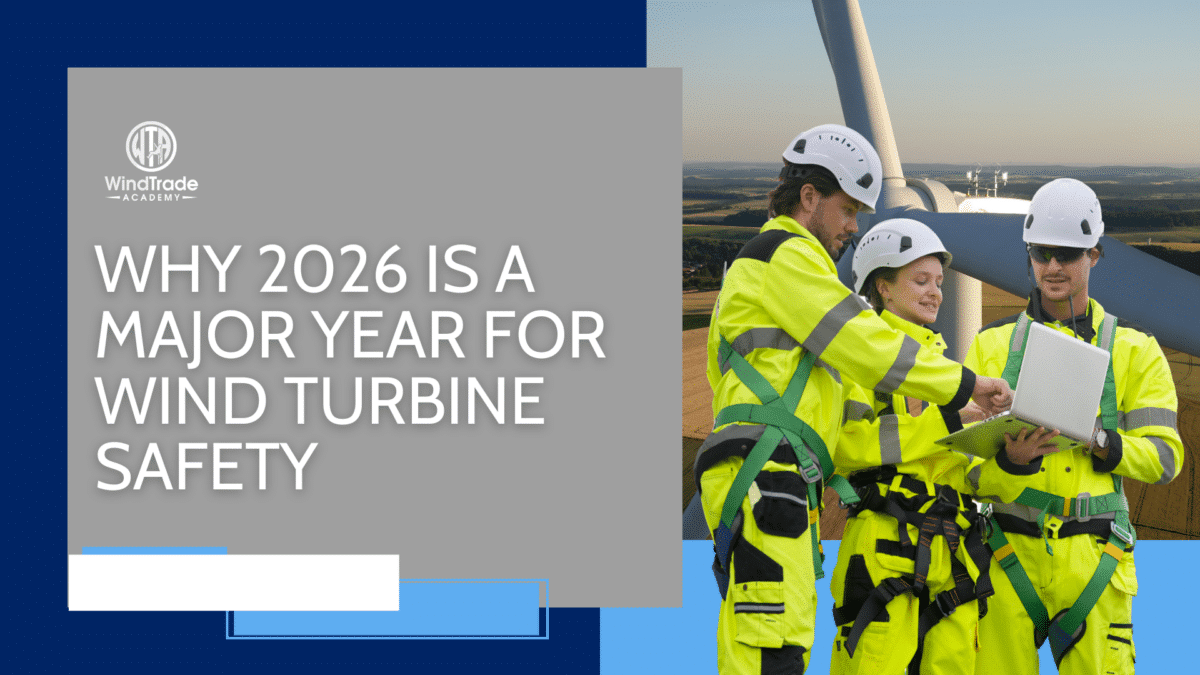
The wind energy industry is evolving rapidly, and with that growth comes tighter safety oversight. In 2026, updated and reinforced wind turbine system safety standards are impacting how technicians train, certify, and operate in the field.
These updates are influenced by guidance and frameworks from:
- Global Wind Organisation (GWO)
- Global Wind Energy Council (GWEC)
- International Electrotechnical Commission (IEC 61400 standards)
- OSHA regulations (U.S.)
- NFPA electrical safety standards
- Regional offshore authorities in Europe and North America
For wind turbine technicians, this means one thing: staying compliant is no longer optional — it’s essential for employment.
What Is Driving the 2026 Safety Updates?
Several industry trends are pushing new safety expectations:
1. Larger Turbines, Greater Risk
Modern turbines are taller and more powerful than ever before. According to the International Energy Agency (IEA), average turbine capacity and height have steadily increased over the past decade.
Bigger systems mean:
- Higher working elevations
- Increased electrical output
- More complex rescue scenarios
- Heavier component lifts
Safety systems must evolve accordingly.
2. Offshore Wind Expansion
GWEC reports that offshore wind capacity is projected to nearly double in several global markets by the late 2020s. Offshore environments introduce additional hazards:
- Marine transfer risks
- Helicopter access procedures
- Confined space exposure
- Advanced rescue requirements
As a result, offshore-specific safety requirements are being strengthened, particularly around:
- Advanced Rescue Training (ART)
- Sea Survival certification
- Electrical and hydraulic isolation procedures

3. Standardization of Global Training
The Global Wind Organisation continues to push for worldwide standardization through its Workforce 26 strategy. One key goal is ensuring technicians across continents meet the same baseline safety competencies.
GWO training modules such as:
- Working at Heights
- Manual Handling
- Fire Awareness
- First Aid
- Advanced Rescue
are increasingly considered minimum requirements, not supplemental credentials.
Key 2026 Safety Focus Areas Technicians Must Understand
1. Enhanced Fall Protection Protocols
Fall risk remains one of the leading causes of injury in wind energy. Updated guidance reinforces:
- Secondary fall arrest systems
- Equipment inspection logs
- Mandatory rescue drills
- Competency validation during refresher training
Technicians must demonstrate practical proficiency, not just theoretical knowledge.
2. Electrical Isolation and Arc Flash Awareness
With higher voltage systems in modern turbines, compliance with electrical safety standards such as NFPA 70E (in the U.S.) and IEC guidelines is increasingly emphasized.
Technicians must understand:
- Lockout/Tagout (LOTO) procedures
- Arc flash boundaries
- Grounding verification
- High-voltage switching safety
Electrical safety knowledge is becoming a core expectation, especially for O&M roles.

3. Advanced Rescue Readiness
Rescue planning is no longer limited to basic descent techniques. Employers are now prioritizing:
- Nacelle-based rescues
- Hub and blade evacuation
- Offshore coordinated rescue operations
- Trauma management during suspension events
GWO Advanced Rescue Training is becoming critical for many roles, especially offshore.
4. Documentation and Digital Compliance
Modern safety systems now require documented proof of competency. Many wind operators are using:
- Digital safety tracking platforms
- WINDA certification verification
- Equipment inspection software
- Incident reporting dashboards
Technicians who understand digital compliance systems will have a competitive advantage.
What This Means for Wind Technicians
If you are currently working in wind energy or planning to enter the field, here’s what the 2026 updates mean for you:
- Refresher training is critical
- Certifications must be current and verifiable
- Advanced modules may be required for offshore placement
- Employers are scrutinizing training records more closely
Technicians without up-to-date GWO certification may face site access restrictions.


How Wind Trade Academy Prepares You for 2026 Standards
As a GWO-approved training provider, Wind Trade Academy aligns its programs with evolving international standards and best practices.
Our training emphasizes:
- Hands-on simulation under real-world conditions
- Rescue scenarios that match modern turbine design
- Electrical hazard awareness integration
- Compliance with global safety benchmarks
We prepare technicians not just to pass training — but to meet employer expectations in 2026 and beyond.
The Bottom Line: Safety Is the New Competitive Edge
Wind turbine system safety is no longer just about avoiding accidents. It is about employability, mobility, and long-term career growth.
The 2026 safety landscape makes one thing clear:
Technicians who invest in proper training and stay current with global standards will have the strongest job security in the wind energy industry.
Ready to Stay Ahead of 2026 Safety Standards?
Start with GWO Basic Safety Training or upgrade with Advanced Rescue Training today.
Train at Wind Trade Academy and position yourself for the future of wind energy.